
Mothers in Herat: Taliban Have Blocked Our Sick Newborns’ Way to Hospital
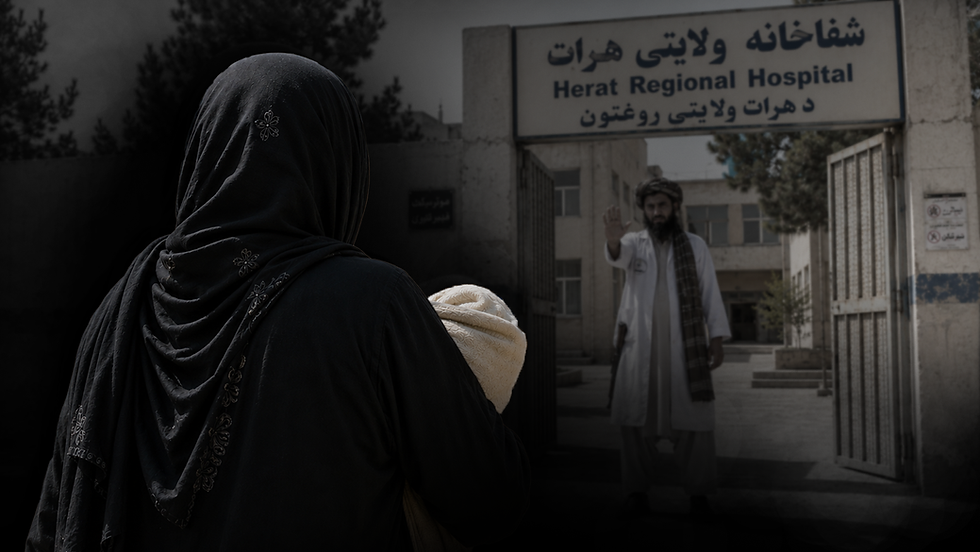
Following an increase in Taliban restrictions on women’s clothing in public places, including health facilities, a number of residents in Herat say these restrictions have made it difficult for mothers and sick children to access medical services and have put their lives at risk.
A number of mothers in Herat have told Zan News that officials from the Taliban’s Ministry for the Propagation of Virtue and Prevention of Vice have prevented them from entering hospitals because they were not wearing a burqa, even when their children needed urgent treatment.
Sofia, 19, says she took her sick child in critical condition to Herat Regional Hospital, but was not allowed to enter because she was wearing a long coat and did not have a burqa.
She told Zan News: “When we arrived, my child could barely breathe. They said because you do not have a burqa, you cannot go inside. My child was dying in my arms.”
She adds that she was forced to look around for a burqa, while her child’s condition was worsening every moment.
Guldasta, another mother in Herat, says she went to a government health centre for her baby’s routine vaccination, but Taliban officials prevented her from entering.
She says: “My husband was with me too, but they said there is no permission without a burqa. I had to borrow a burqa from a nearby house so I could vaccinate my child.”
Women’s rights activists warn that the strict enforcement of dress rules in health facilities could have serious consequences for the health of women and children.
Salima Haqdost, a women’s rights activist, says: “When a mother cannot freely go to a health centre, the first victim is the child.”
This comes as the Taliban arrested a number of women in Herat in May this year on charges of failing to observe the group’s required dress code. Following these arrests, residents of Herat’s Jebrael area staged a protest, but the protest was suppressed by Taliban forces. UNAMA has said the Taliban arrested at least 30 women in Herat.
The Taliban have repeatedly said that rules on women’s clothing have been imposed within the framework of “Islamic Sharia” and that their aim is to “preserve Islamic values”.
However, the group has so far provided no clear explanation on how these rules should be enforced in medical emergencies.
Since the Taliban returned to power in 2021, Afghanistan has faced a worsening economic crisis and shortages of health services and facilities. International organisations have repeatedly warned of the growing risk of maternal and child mortality.
In such conditions, a number of families in Herat say Taliban restrictions on women’s clothing have made access to health services more difficult for mothers and sick children, increasing concerns about the consequences.


