
Women’s Movement Network: Kankor Without Girls Is an Official Document of Gender Apartheid
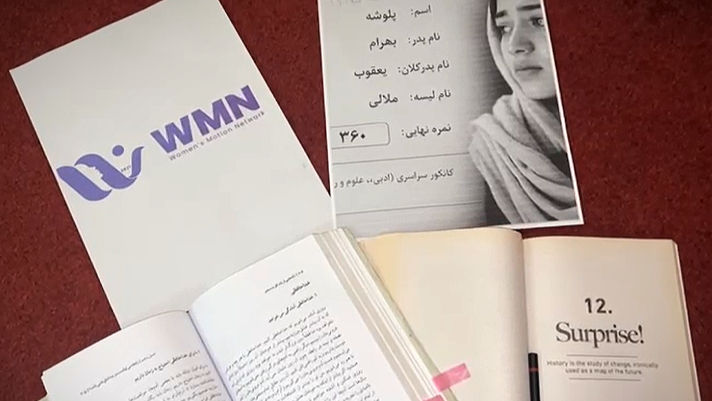
The Women’s Movement Network, in response to the announcement of the 1405 Kankor results, has said that announcing the results of this exam without the presence of even one girl is a sign of the “burial of justice, equality and Afghanistan’s future”.
The results of the general Kankor exam for 1405 were announced on Monday (6 July) by the Taliban’s National Examination Authority. The exam was held for the fourth consecutive year without the participation of girls, a matter that has drawn widespread reactions from women and human rights activists.
The Women’s Movement Network said in a statement on Tuesday (7 July) that a Kankor exam without the presence of girls “is not Kankor”, but, according to the network, “an official document of gender apartheid and the systematic exclusion of half of Afghanistan’s society”.
The statement said: “Today, the Taliban announced the results of Afghanistan’s Kankor without the presence of even one girl. This day is not a day of victory for knowledge, but the day of the burial of justice, equality and Afghanistan’s future.”
According to reports, around 120,000 candidates took part in this year’s Kankor exam, and around 74,500 were admitted to higher education institutions. Rashed, son of Pahlawan, from Parwan province, ranked first in this year’s Kankor with a score of 360.
However, there was no girl among these candidates. Afghan girls have been deprived of attending schools above the sixth grade, universities and participating in Kankor because of Taliban restrictions.
The Women’s Movement Network said the exclusion of girls from Kankor is not only the result of Taliban policies, but also the consequence of the “silence, inaction and ineffective policies of the international community”.
In its statement, the network condemned the Taliban for depriving girls of education and a future, and called on the United Nations, governments claiming to defend human rights and international institutions to take practical action instead of issuing repeated statements.
Part of the statement said: “How long are Afghan girls supposed to pay the price of your inaction?”
The Women’s Movement Network said fruitless meetings, repeated statements and ineffective diplomacy have not returned any girl to school or opened any university door to girls.
The network added that the silence and inaction of the international community have emboldened the Taliban in their policy of excluding women and girls, and have turned their deprivation from education into a normalised process.
This comes as the Taliban, after returning to power in 2021, closed girls’ schools above the sixth grade and later banned women and girls from attending universities. These restrictions have deprived millions of girls of continuing their education and building a professional future.
At the end of its statement, the Women’s Movement Network said: “Afghanistan has no future without girls, and Kankor without girls is only evidence of the collapse of justice, humanity and the conscience of the world.”
The deprivation of girls from Kankor is not only their exclusion from an educational exam. This policy blocks girls’ path to university, specialised work, economic independence and participation in Afghanistan’s future. Women’s rights activists say that as long as the doors of schools, universities and Kankor remain closed to girls, no claim about educational justice and Afghanistan’s future can be defended.


